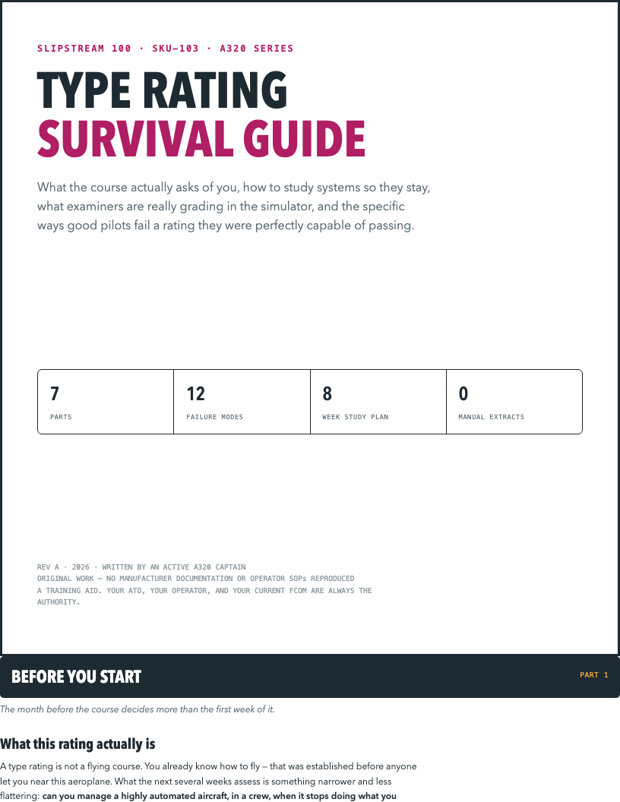
Type Rating Survival Guide
What the course actually asks of you — a study method that retains, the philosophy shift experienced pilots underestimate, and twelve ways good pilots fail a rating they were capable of passing.
$19Launching soon
A320 · Type rating & recurrent
Failure management drawn as geometry and timeline, memory items drilled as sequence, and the guide nobody wrote about surviving the course.
Written and flown by a senior A320 captain
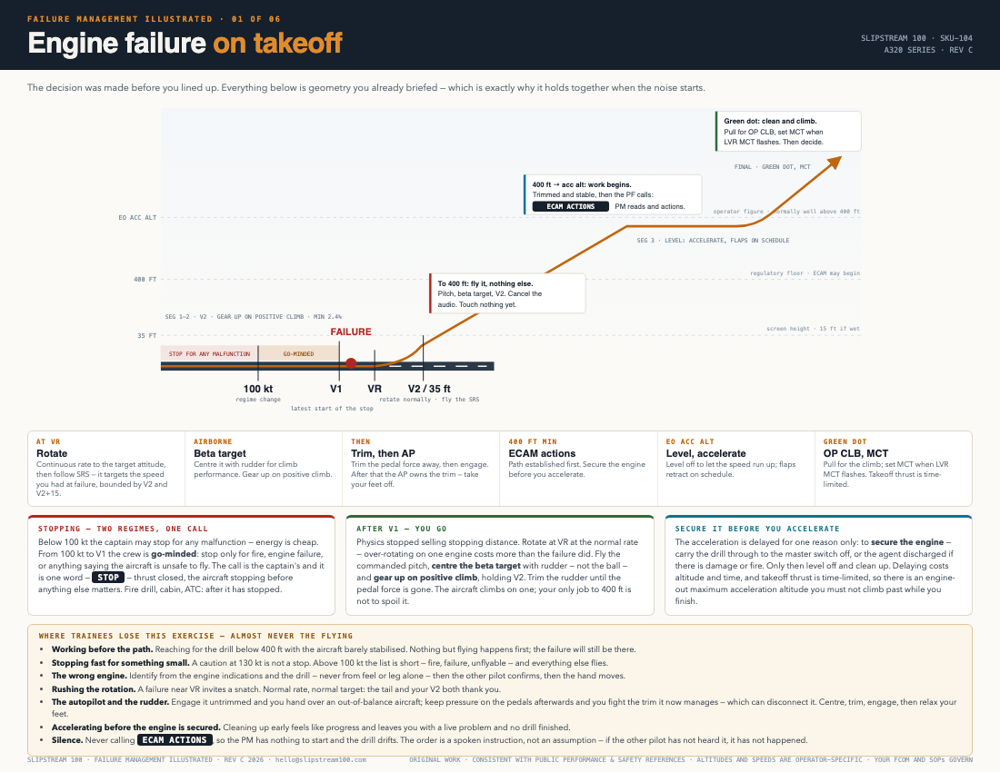
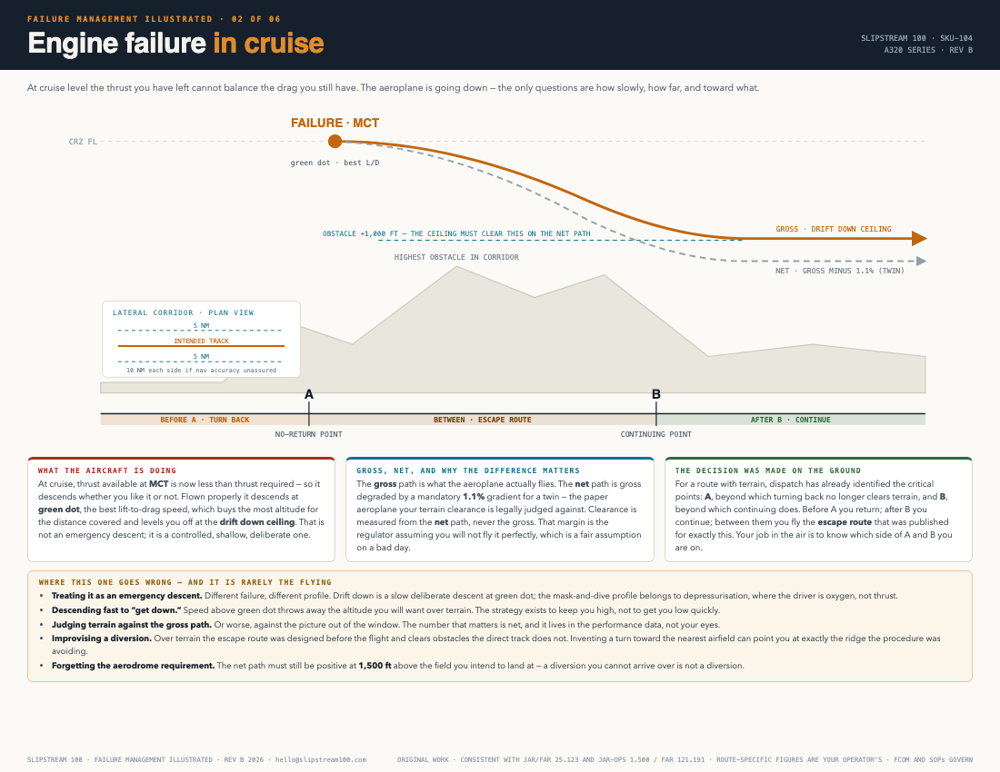
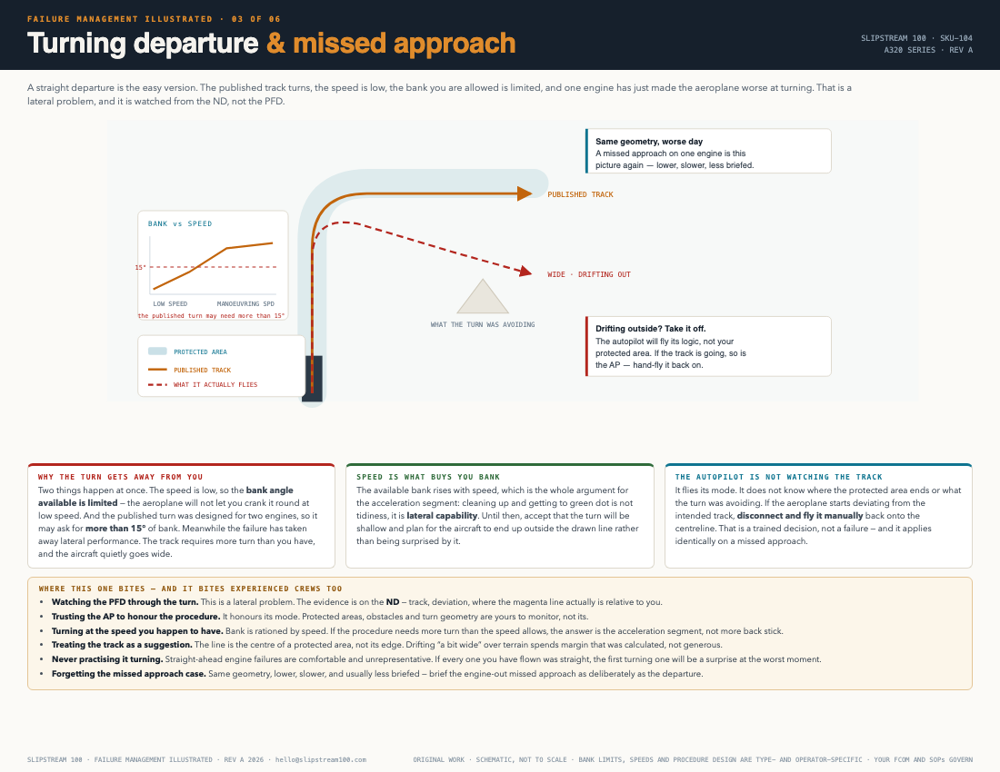
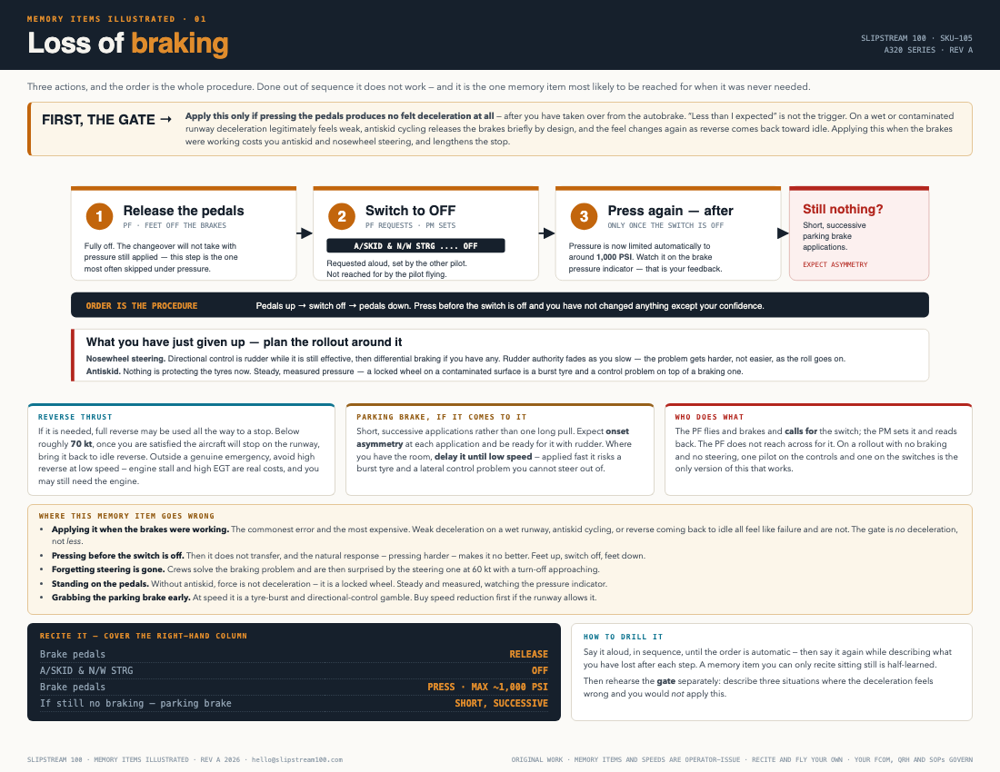
Real pages, not mockups. Every one is built around the thing a manual cannot give you — the shape of the response, the order that makes it work, and where people actually lose it.
← DRAG OR SCROLL TO SEE MORE
What the course actually asks of you — a study method that retains, the philosophy shift experienced pilots underestimate, and twelve ways good pilots fail a rating they were capable of passing.
Six one-page illustrations of what a failure actually looks like: the geometry, the timeline, the decision points, the spoken calls, and where trainees lose the exercise.
Nine items, one to a sheet, so the one you need goes in the sim bag on its own. When it applies, the order that makes it work, what you have just given up — and a cover-the-column recitation drill.
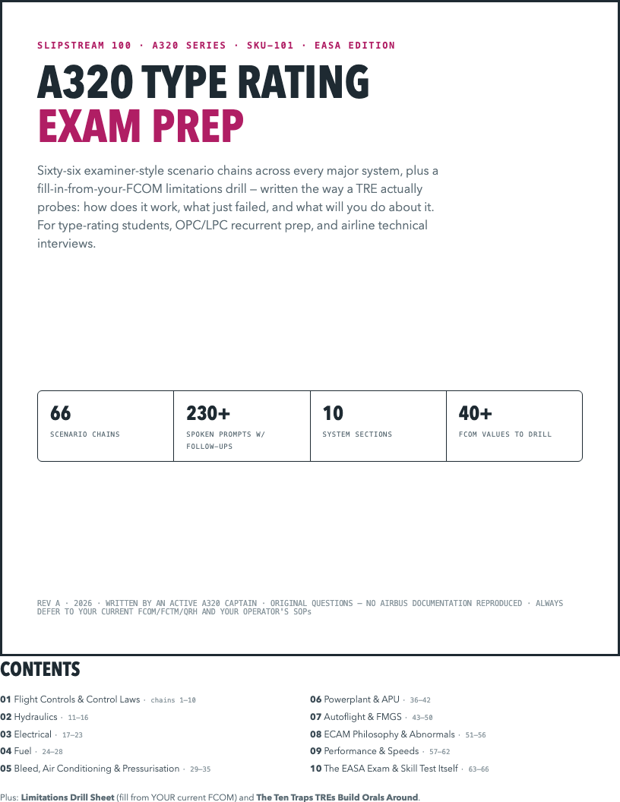
Banks train you to recognise the answer. An examiner makes you say it. 66 scenario chains with the follow-ups and the trap, plus a limitations drill you fill from your own manual so it never goes stale.
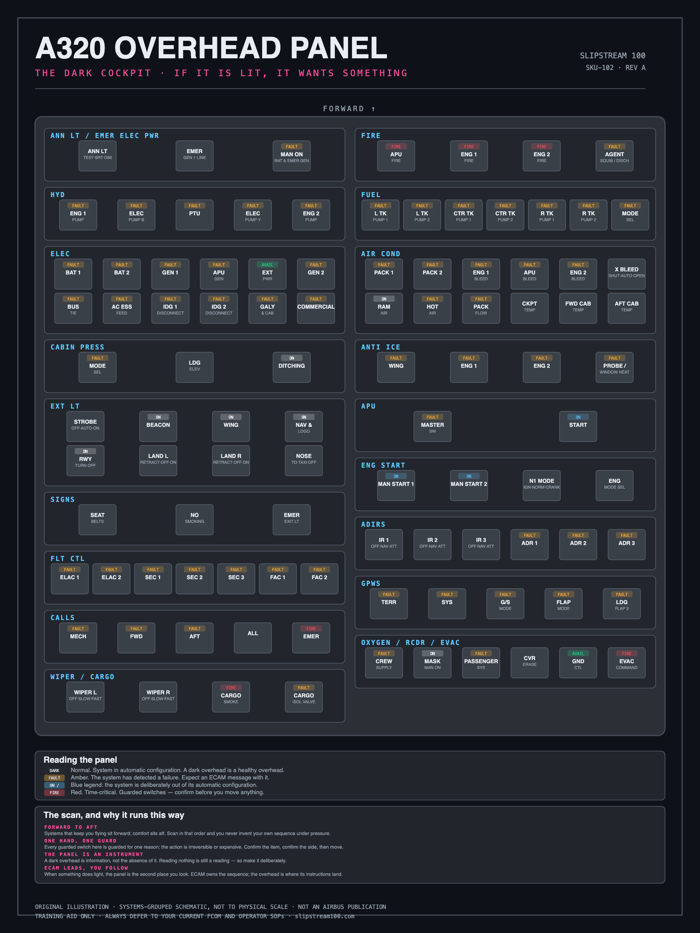
Every A320 product together — the survival guide, both illustrated sets, and the exam prep — plus every page added to them later, free.
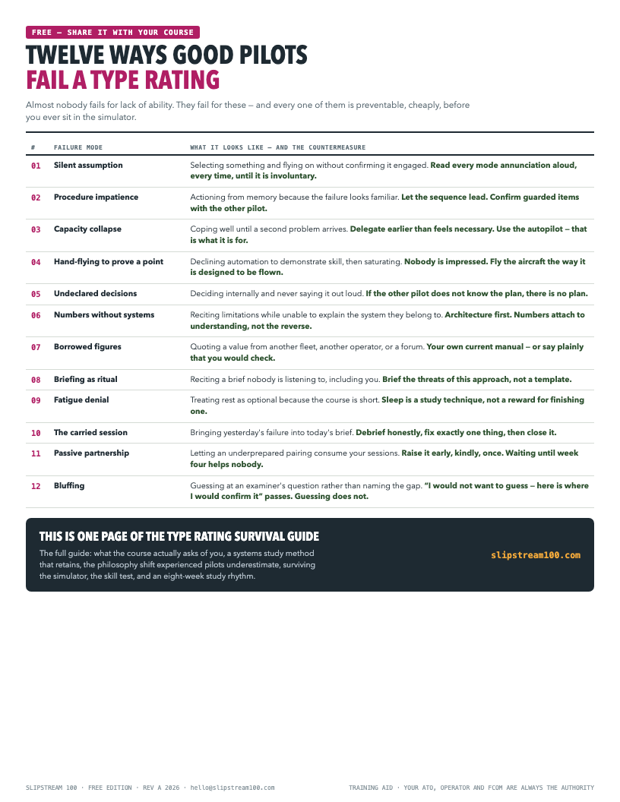
Start here · no charge
Almost nobody fails for lack of ability. They fail for these — and every one is preventable, cheaply, before you ever sit in the simulator. One page. Share it with your course.
INSTANT PDF · PAY WHAT YOU LIKE, INCLUDING NOTHING · NO SPAM, EVER
Why these exist
Examiners do not read you question lists. They hand you a failure, a crew and a day that is already busy — then follow up wherever your answer runs thin. Reference material is built to be correct. It is not built to do that to you.
So every product here is shaped around the moment it is actually for: geometry instead of prose, sequence instead of steps, a fill-in drill instead of numbers that go stale on the next revision.
Instant digital downloads — print-optimised PDFs, plus an Excel workbook for the ownership calculator. No shipping, no waiting, no subscription.
No — and that matters. Everything is original training content. Nothing is reproduced from manufacturer documentation or any operator's manuals. Your current FCOM, your operator's procedures, your ATO and your instructor are always the final authority. These are training aids, not operational documents.
No, because the operator-specific figures are deliberately not printed. Acceleration altitudes, limitations and callout wording vary between operators flying identical aircraft, so the pages teach the shape and the reasoning, and you fill your own figures from your own current manual. That is what makes them usable wherever you fly.
Use one — they are good at what they do. A bank trains you to recognise the right answer among four. An examiner makes you say it, then asks the follow-up. These products rehearse the saying.
Personal licences cover individual use. Airline, ATO and classroom licensing is available — email [email protected] and tell me roughly how many students.
A senior A320 captain who sits the same recurrent checks these prepare for. Everything here started as material built for real study — a colleague heading into a course, a question that kept coming up in the crew room — and was then made properly.